Crop Optimization

AI can help experts breed healthier and more resistant crops that can help communities survive changing conditions and avoid economic fallout from failed harvests.

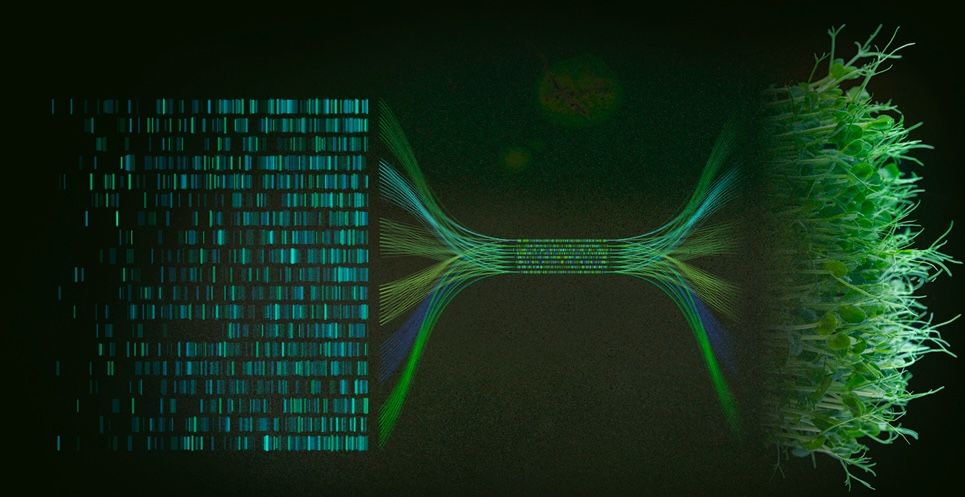
Fibers connecting code to grass

The quantity and quality of crop yields is determined by the interplay of genetic, environmental, and management variables, or GxExM. Environmental factors (e.g., changing temperature, rainfall, soil condition, and pests) and a lack of access to crop management tools and strategies significantly limit the yield potential of farmers around the world.

Crop breeding, whether done "conventionally" or using genetic engineering techniques, works to create new and improved plant varieties that are

  • more resilient to environmental stressors;
  • resistant to pathogens and pests; and
  • higher in nutritional value.

The Role of AI

  • AI enhances the global systems that support crop breeding by reducing data fragmentation and improving access to vast quantities of plant information. It transforms data collection and analysis processes for trait discovery and validation, and democratizes powerful cutting-edge scientific tools. Crop development can take a decade or more to bring a new and improved variety to market. AI-enabled tools shorten that timeline greatly.
  • AI helps unlock the vast quantities of biological data stored in the genomes of wild plants and crops stored in farms and gene banks. It also transforms the methods available to turn that data into beneficial traits in crops around the world. AI is supporting novel ways to bring new high-quality seeds to market at an unprecedented pace, helping to overcome the rate of global ecological change that challenges today's production.

Best Practices

Best practices call for investment in foundational scientific discovery and data-sharing infrastructure, institutional capacity building in ecologically vulnerable and agriculturally dependent regions, and robust, equitable regulatory standards that enable, rather than stymie, innovation.

Applications for AI

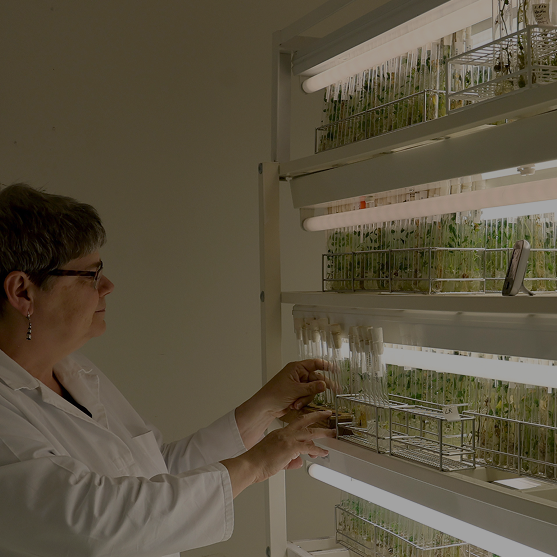
Researcher examining plant samples in a gene bank

Application 1

Data Management

Uses AI tools to unlock the vast genetic diversity stored in gene banks and make that diversity more accessible to crop breeders worldwide

Application 1

Data Management

Uses AI tools to unlock the vast genetic diversity stored in gene banks and make that diversity more accessible to crop breeders worldwide

Decades of genetic and phenotypic data are stored across formats that are either incompatible or inaccessible for researchers. Collectively, gene banks around the world house millions of plant samples, serving as the living libraries of crops and their wild relatives. However, much of the biological information in the genes of those samples remains inaccessible, sometimes called dark data.

AI presents a unique opportunity to shed light on the data, while also harmonizing and digitizing the vital datasets that facilitate breeding efforts by the global network of crop researchers.

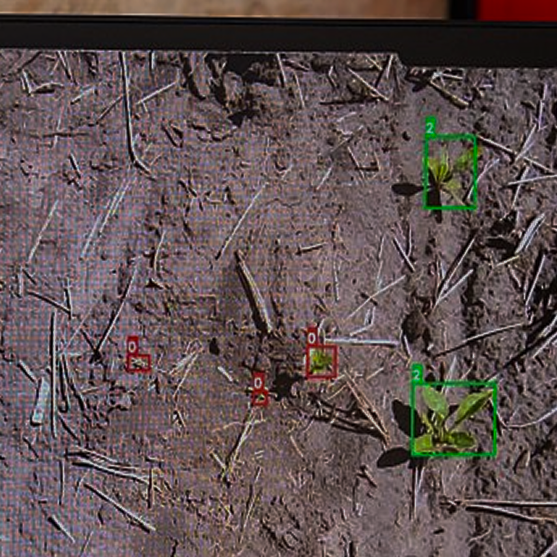
AI-assisted plant trait detection and analysis imagery

Application 2

Data Collection and Analysis

Enhances the identification and analysis of plant traits for faster, more effective crop breeding

Application 2

Data Collection and Analysis

Enhances the identification and analysis of plant traits for faster, more effective crop breeding

Conventional crop breeding is built on the ability to select for the preferred physical and chemical characteristics of plants (i.e., phenotype). But traditional phenotypic data collection is hugely labor and time intensive, and often relies on limited or variable expertise.

AI-enabled systems can help researchers identify plant traits faster, more accurately, and more consistently than ever before, even in low-resource settings. These systems also strengthen feedback loops between crop breeders and farmers, improving outcomes for both.

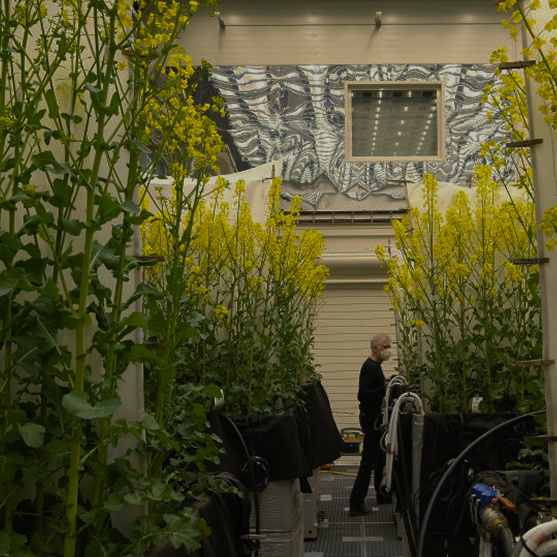
Greenhouse with genetically engineered crop varieties

Application 3

Genomic Tools

Uses AI-assisted or AI-enabled genetic engineering to produce resilient, locally tailored crops faster than ever before

Application 3

Genomic Tools

Uses AI-assisted or AI-enabled genetic engineering to produce resilient, locally tailored crops faster than ever before

Increasing heat, changing precipitation patterns, and novel disease and pest threats are challenging the way farmers have produced their crops for generations. And the speed that these environmental threats are changing is faster than evolution can keep up.

An AI-supercharged revolution in biology—with new tools such as AlphaFold—can help close the gap, making it possible to scale and produce resilient, "bespoke" crop varieties at the pace this ecological change demands.

This report was made possible by
the generous support of Google.org.

Research

The CSIS Global Food and Water Security Program

Acknowledgments:

CSIS also thanks all participants of the Artificial Intelligence for Food Security roundtables and the AI for Food Security Forum; with special thanks to those researchers, practitioners, and stakeholders who have contributed to the AI Collaborative: Food Security.

Image Credits:

Header Illustration: DNA sequencing merges into pea microgreens. Image created by Gina Kim, with assets from Ihor Batishchev via Getty Images and BHP Studio and Igor via Adobe Stock.

Application 1: A lecture in the climate room of the Leibniz Institute of Plant Genetics and Crop Plant Research with in-vitro potato plants in June 2025. | Bernd Wüstneck/picture alliance via Getty Images.

Application 2: A monitor displays how one of Aigen's solar-powered autonomous AI robots deciphers different types of plants while operating at a farm in in Los Banos, California, in June 2025. | Josh Edelson /AFP via Getty Images.

Application 3: A hall in Leibnitz Institute of Plant Genetics and Crop Plant Research that breeds biodiverse hybrid plants using the largest crop seed bank in the European Union. | Sean Gallup/Getty Images.

Story Production

The Andreas C. Dracopoulos iDeas Lab

Editorial and project oversight:

Design:

Sarah B. Grace and Gina Kim

Illustrations:

Gina Kim

Data visualizations:

Web design assistance:

Copyediting: