
Revolutions stretching across the last 12,000 years have reshaped human health and potential,
Neolithic Revolution
10,000 BCE
Crops and livestock first domesticated
touching every aspect of life—
Second Agricultural Revolution
1700s CE
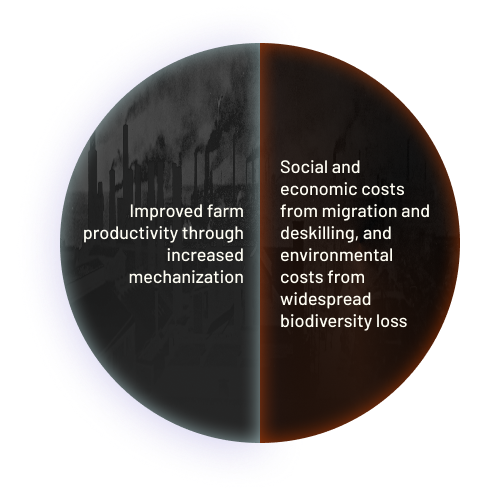
Industrialization of farming and production
all through changes to the way food is produced and shared
Green Revolution
Mid-1900s CE
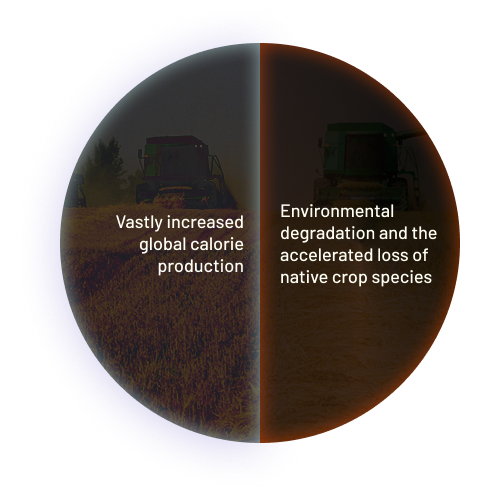
Development of modern fertilizers, pesticides, irrigation, and crop varieties
The next revolution has arrived, with the potential to help achieve food security for all
Digital Revolution
Late 1900s – Early 2000s CE
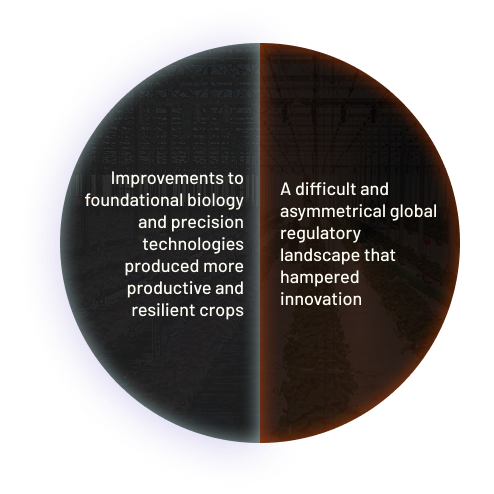
Digital devices adopted for farms, big data used for decision-making, and internet infrastructure transforming access
And it starts with AI
AI-Enabled Revolution
Today
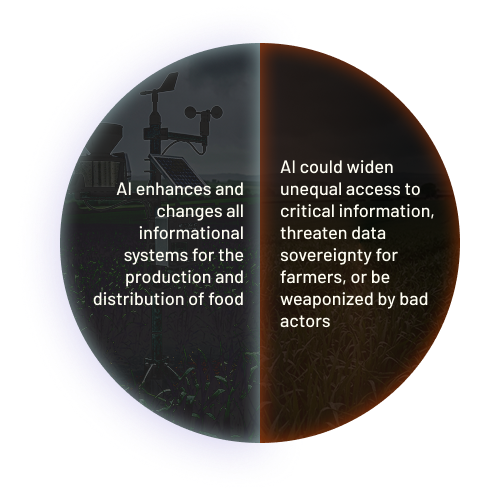
AI revolutionizes human capacity in food production and distribution, creating the potential for worldwide food security
AI to Fight World Hunger
Each of these revolutions has dramatically improved agriculture and access to food; these compounding changes have bolstered food security exponentially. Today's agricultural systems produce more food and more calories than at any other point in history.
Still, 2.7 billion people cannot afford a healthy diet, and as many as 696 million people face undernourishment.
As pressures on food systems—conflict, climate, and economic shocks—mount, the world urgently needs this new revolution to help end global hunger.
Changing Fields
AI's potential impact on global food security is seismic.
Those seeking to end hunger have already begun deploying AI in the lab and on the field. In the coming years, there will be more tools at their disposal than ever before, and unprecedented access to new forms of analysis and data.
Building on decades of development assistance, humanitarian action, and agricultural innovation, AI can serve as both a conduit and amplifier for human-driven work, connecting and optimizing data and tools that have long been siloed and filling operational gaps that humans alone cannot.
There are three key, interconnected domains in which AI will have the biggest impact for shaping food security outcomes.
Click below to explore:
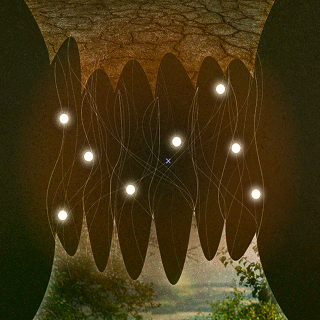
In the first domain, AI helps avert food security crises through early warning systems that leverage data gathered from a huge range of sources, from local news reporting to geosynchronous satellites that monitor crops. These systems provide recommendations that enable better anticipatory actions to safeguard economies and give decisionmakers the power to save uncounted lives.
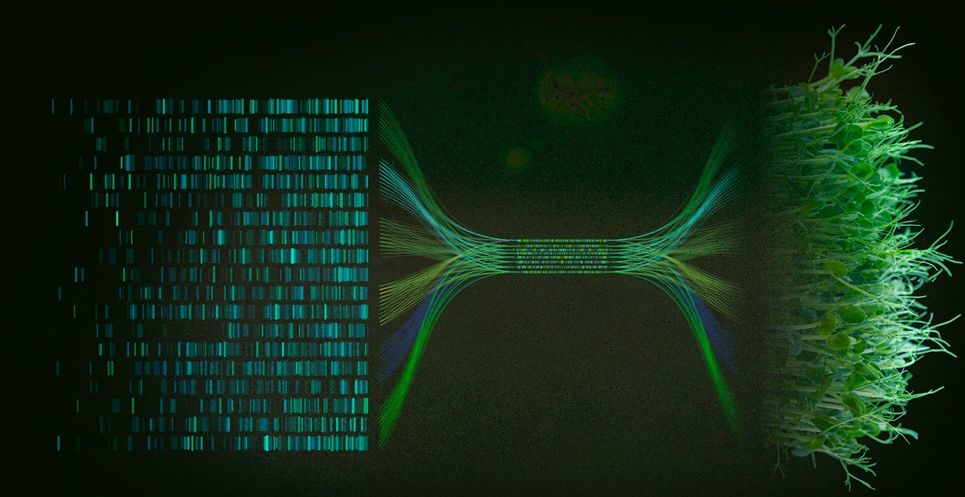
For the second domain, crop optimization with AI lets researchers and crop scientists use digital biological libraries and cutting-edge genetic techniques to improve crop performance. This work helps safeguard and enrich healthy, shock-proof foods for farmers and the communities they supply worldwide.
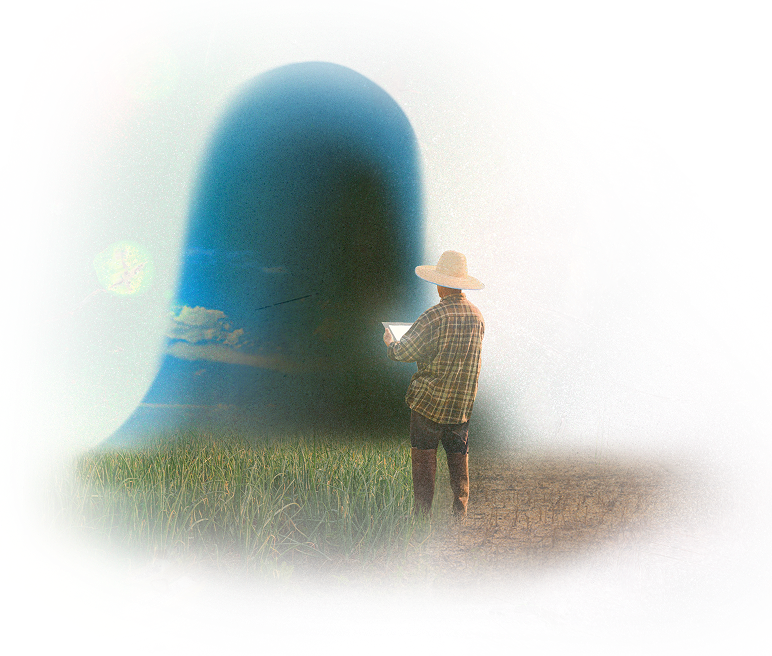
AI in the third domain, guided agriculture, enhances techniques and technologies to equip farmers with recommendations for exact water, nutrient, and other care for their crops given observed and anticipated conditions. Farmers can access real-time information and use new technologies to work their farms in new, more effective ways, with extremely impactful results.
Consequence, Capacity, and Access
AI will revolutionize food systems, but its capacity for good comes with serious, globe-spanning risks.
There is precedent for this: The same modern food system that was built to feed the world now contributes to economic and environmental strife in many regions.
Unforeseen consequences have shadowed all previous agricultural revolutions:
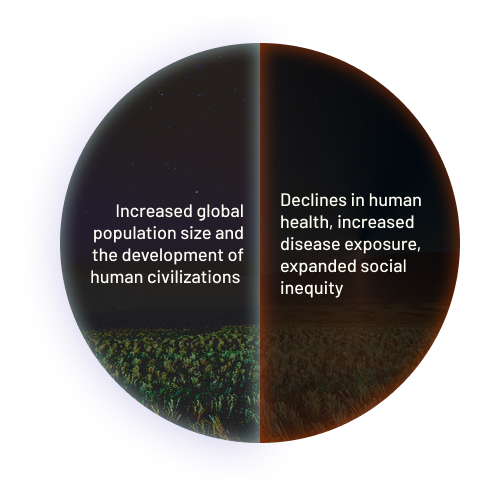
Revolution
Many best practices for deploying this new technology have already been established. But for the AI revolution to succeed in bringing a more food-secure world to fruition, those who shape it will need to learn from the past and present to anticipate the future.
Fulfilling AI's promise will require people developing technical and policy ecosystems that can incubate, nurture, and scale these tools. At the same time, experts need to balance complex and interdependent demands to achieve the following:
-
Build effective data
Balance the requirements for inclusive data access, data privacy, and intellectual property to foster trust among stakeholders; maintain competitiveness among model developers; and scale accessible solutions.
-
Design food security solutions
Incentivize the development of bottom-up solutions over top-down model development for the deployment of bespoke and efficient community-specific tools.
-
Regulate AI for food security
Leverage existing agriculture, biotechnology, and consumer protection regulatory frameworks to develop proactive approaches that provide needed safeguards while not hampering innovation.
-
Equalize capacity globally
Invest in capacity building, foundational science, and partnership with the private sector to elevate local experts and stakeholders in the countries where tools are deployed.
-
Localize, including language
Develop tools that are understandable and actionable with and for the communities they serve without compromising efficacy.
-
Fill the trust gaps
Build trust in AI and digital systems through transparency and accountability across value chains—from developers and decisionmakers to implementors and users on the ground.
Tools and experience exist to do this on a global scale—but not for everyone:
Access is another flashpoint issue.
Institutional capacity and practical applications required to effectively leverage AI tools are not equitably distributed, blunting its potential for transformational change.
Without conscientious and proactive efforts to address this, AI could simply entrench the systemic inequalities that already hamper food production and exacerbate insecurity worldwide.
Achieving the objectives of the global food system—improving sustainable yields, nutrition, access and affordability; building resilient supply chains; and bettering working conditions for farmers—is possible. But it requires AI's integration to be proactive, thoughtful, and designed for those who need it most.
The AI revolution will only meet the scope of today's food security crisis if equitable access to innovations and the resources needed to deploy them are ensured for all.
Only then will AI fulfill its promise to accelerate innovations decades and centuries in the making, transforming nearly every aspect of the global food system and life for millions of people.
Conclusion
AI is a powerful tool for helping end world hunger, but it is not a solution in and of itself.
Today’s AI revolution can unleash human potential by expanding stable access to safe, nutritious food for everyone, everywhere—improving the capacity of every generation to come.
AI development is accelerating too fast, and the cost of global hunger is too great, for the world’s decisionmakers, technologists, and policymakers not to take advantage of the tools at their disposal—for early warning systems, crop breeding, advanced farming, and more.
Many of the transformations that AI will help to deliver are already here, but countless more are waiting to be discovered.
Ultimately, the measure of the good that AI can realize for the world will be determined by those who build its capacity, scale its use, deploy its potential, and employ its possibility—with the stakes of world hunger, and those impacted by it, in mind.
The CSIS Global Food and Water Security Program is a member of the AI Collaborative: Food Security.
Related CSIS Sources
- AI and Global Food Security: A Focus on Food Systems
- AI and Global Food Security: A Focus on Crop Breeding
- AI and Global Food Security: A Focus on Early Warning Systems
- AI and Global Food Security: A Focus on Precision Agriculture
- AI for Food Security Forum
- NASA Harvest Technical Demonstration
- Applying AI to Global Food Insecurity: NASA Harvest
- World Bank DIME AI Technical Demonstration
- Applying AI to Global Food Insecurity: World Bank DIME AI
- CGIAR Technical Demonstration
- TomorrowNow Technical Demonstration
- Applying AI to Global Food Insecurity: TomorrowNow
- Applying AI to Global Food Insecurity: HungerMap LIVE
Averting Crisis Resources
- WFP: AF-PULSE
- Arizona State University
- UNOPS: Compass
- FEWS NET
- GEOGLAM
- GIEWS - Global Information and Early Warning System on Food and Agriculture
- Global Opportunity Lab
- Google Earth AI
- Harvest2Market
- Helios AI
- WFP: HungerMap LIVE
- NVIDIA Earth-2
- Predicting Food Crises Using News Streams
- RAAPID
- WFP: SCOUT
- WeatherNext
- DIME AI - ZeroHunger AI
Crop Optimization Resources
Guided Agriculture Resources
This report was made possible by the generous support of Google.org.
Research
The CSIS Global Food and Water Security ProgramWritten by:
Acknowledgments:
CSIS thanks all participants of the Artificial Intelligence for Food Security roundtables and the AI for Food Security Forum; with special thanks to those researchers, practitioners, and stakeholders who have contributed to the AI Collaborative: Food Security.
Story Production
The Andreas C. Dracopoulos iDeas LabEditorial and project oversight:
Development:
Design:
Sarah B. Grace and Gina Kim
Illustrations:
Gina Kim
Data visualizations:
Web design assistance:
Timeline Image Credits:
Neolithic Revolution: Rice terraces at Ban Mae Klang Luang Doi Inthanon National Park in Thailand at night. | Puttapon via Getty Images
Second Agricultural Revolution: Undated view of a large factory complex with plumes of smoke rising from smokestacks, unspecified location, probably USA. | Welgos/Getty Images
Green Revolution: Combine harvesters operate in a field. | Wikifarmer
Digital Revolution: Soilless-cultivated strawberries at a farm in Dongying, China. | Liu Yunjie/VCG via Getty Images
AI-Enabled Revolution: A smart tech rainfall sensor in a field. | Comptus
Illustration Credits:
Averting Crises: Dry land morphs into an orchard meadow. Image created by Gina Kim with assets by Xuanyu Han and Andreas Arnold/picture alliance via Getty Images.
Crop Optimization: DNA sequencing merges into pea microgreens. Image created by Gina Kim, with assets from Ihor Batishchev via Getty Images and BHP Studio and Igor via Adobe Stock.
Guided Agriculture: The use of AI technology helps a farmer transform barren land into a lush field. Image created by Gina Kim with assets by KDP via Getty Images and Adobe Stock.
 Built with Shorthand