Averting Crises

Early warning systems use AI to analyze widely varied data sources to anticipate crises and give recommendations to decisionmakers that reduce negative impacts and save lives.

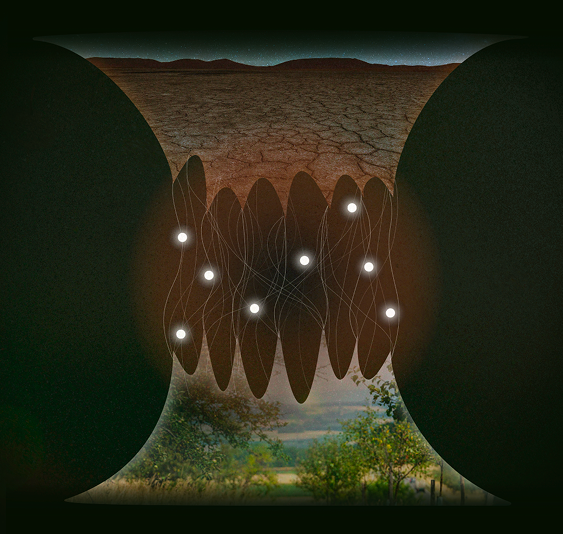
AI decision network over cracked earth transitioning to lush landscape

Global food security is threatened by increasingly complex risks compounded by systemic vulnerabilities. The U.S.-Iran war, Russia's continued war on Ukraine, and the 2026 El Niño, for instance, are converging into higher-risk scenarios for food systems worldwide.

Protecting and improving food security requires seeing risks like these as soon as possible, with the utmost accuracy. Early warning systems do just this, providing the information needed to anticipate and mitigate the consequences of

The Role of AI

  • AI enhances the scale, scope, and types of early warning data that can be collected. It also improves the pace, accuracy, and precision of analysis, which better enables the proactive responses needed to reduce harm. Subsequently, the outcomes of these responses create vital information feedback loops to continuously improve models and their output.
  • AI automates triggers and guidance (e.g., decision trees) to allow preapproved anticipatory action to kick off instantaneously in a crisis. Directly after an event and in near real-time, AI enables evaluation and adaptation for decisionmaking. For communities in fragile or data-scarce regions, AI advances data integration across diverse sources and formats, which is difficult or impossible for humans to do unassisted.

Best Practices

Best practices call for sustained funding for data collection, equitable access to the data, and meaningful stakeholder involvement. This includes shared responsibility standards, reducing duplicative efforts, and the joint development of models, triggers, implementation practices, and appropriate safeguards.

Applications for AI

Researcher examining plant samples in a gene bank

Application 1

Data Management

Uses AI tools to unlock the vast genetic diversity stored in gene banks and make that diversity more accessible to crop breeders worldwide

Application 1

Data Management

Uses AI tools to unlock the vast genetic diversity stored in gene banks and make that diversity more accessible to crop breeders worldwide

Decades of genetic and phenotypic data are stored across formats that are either incompatible or inaccessible for researchers. Collectively, gene banks around the world house millions of plant samples, serving as the living libraries of crops and their wild relatives. However, much of the biological information in the genes of those samples remains inaccessible, sometimes called dark data.

AI presents a unique opportunity to shed light on the data, while also harmonizing and digitizing the vital datasets that facilitate breeding efforts by the global network of crop researchers.

AI-assisted plant trait detection and analysis imagery

Application 2

Data Collection and Analysis

Enhances the identification and analysis of plant traits for faster, more effective crop breeding

Application 2

Data Collection and Analysis

Enhances the identification and analysis of plant traits for faster, more effective crop breeding

Conventional crop breeding is built on the ability to select for the preferred physical and chemical characteristics of plant (i.e., phenotype). But traditional phenotypic data collection is hugely labor and time intensive, and often relies on limited or variable expertise.

AI-enabled systems can help researchers identify plant traits faster, more accurately, and more consistently than ever before, even in low-resource settings. These systems also strengthen feedback loops between crop breeders and farmers, improving outcomes for both.

Greenhouse with genetically engineered crop varieties

Application 3

Genomic Tools

Uses AI-assisted or AI-enabled genetic engineering to produce resilient, locally tailored crops faster than ever before

Application 3

Genomic Tools

Uses AI-assisted or AI-enabled genetic engineering to produce resilient, locally tailored crops faster than ever before

Increasing heat, changing precipitation patterns, and novel disease and pest threats are challenging the way farmers have produced their crops for generations. And the speed that these environmental threats are changing is faster than evolution can keep up.

An AI-supercharged revolution in biology—with new tools such as AlphaGenome and AlphaFold—can help close the gap, making it possible to scale and produce resilient, "bespoke" crop varieties at the pace this ecological change demands.

This report was made possible by
the generous support of Google.org.

Research

The CSIS Global Food and Water Security Program

Acknowledgments:

CSIS also thanks all participants of the Artificial Intelligence for Food Security roundtables and the AI for Food Security Forum; with special thanks to those researchers, practitioners, and stakeholders who have contributed to the AI Collaborative: Food Security.

Image Credits:

Header Illustration: Dry land morphs into an orchard meadow. Image created by Gina Kim with assets by Xuanyu Han and Andreas Arnold/picture alliance via Getty Images.

Application 1: Satellite view of Lake Powell in Utah in April 2022. | Gallo Images/Orbital Horizon/Copernicus Sentinel Data 2022.

Application 2: Census enumerators part of India's 16th Census 2027 in Kashmir in June 2026. | Firdous Nazir/NurPhoto via Getty Images.

Application 3: Trading floor at the Genial Investments headquarters in Sao Paulo, Brazil, in August 2026. | Victor Moriyama/Bloomberg via Getty Images.

Story Production

The Andreas C. Dracopoulos iDeas Lab

Editorial and project oversight:

Design:

Sarah B. Grace and Gina Kim

Illustrations:

Gina Kim

Data visualizations:

Web design assistance:

Copyediting: