
CSIS Journalism Bootcamp:
Student Perspectives
On the Heels
of Change
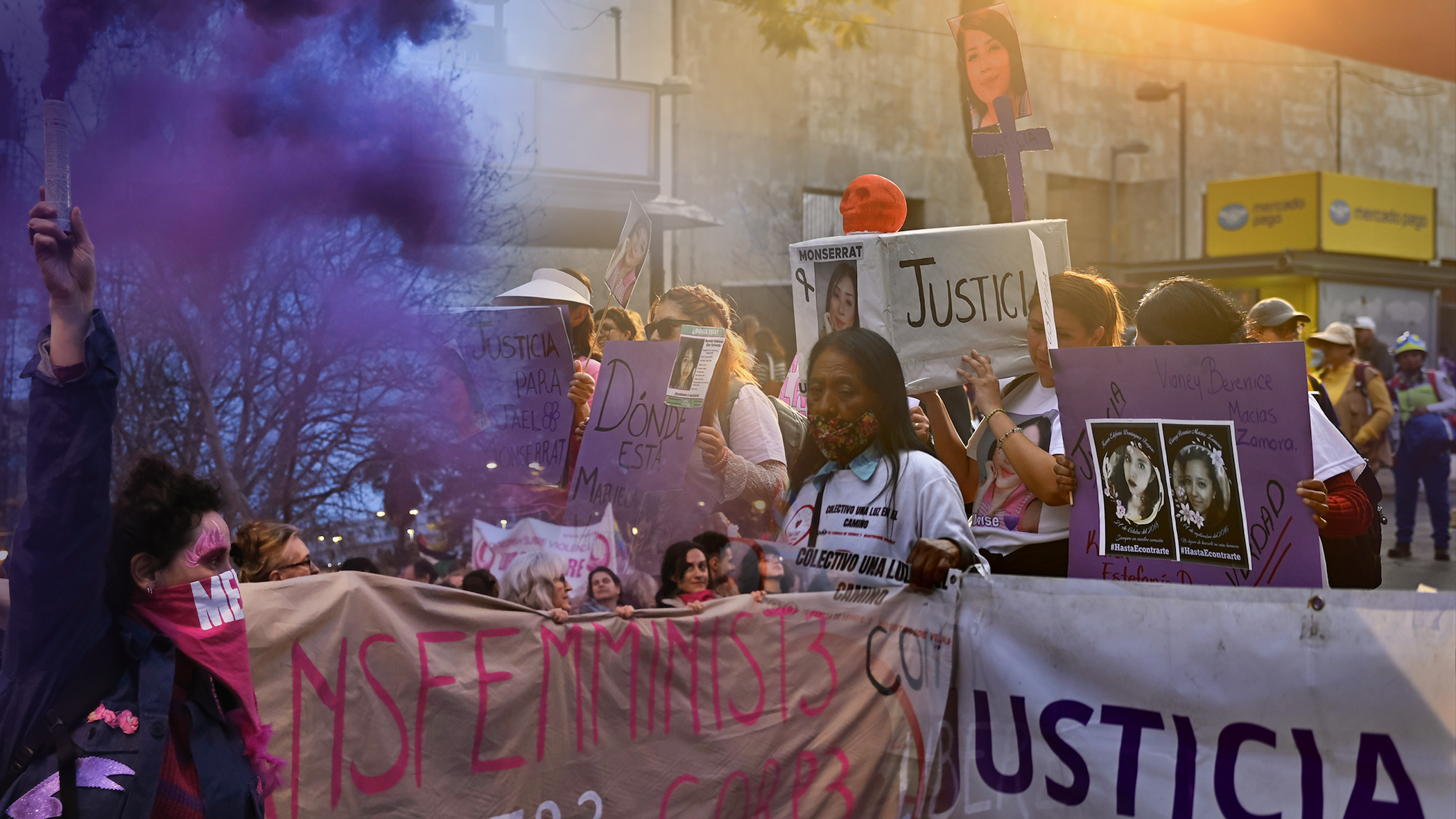

On February 5, 2026, in Nogales, Mexico, an American man was arrested for the murder of a Mexican woman named Kristina N., whose killing had gone unanswered since 2021.
One month later and almost 6,000 miles away, Valentina Sarto, a 42-year-old bartender, was killed by her husband in their home in northern Italy on March 18, 2026.
Both cases have been classified as femicides, defined as the intentional killing of a woman based on her gender, according to UN Women.
Italy and Mexico are both grappling with persistent rates of femicides, as well as other forms of violence that are classified as gender-based violence (GBV). Both countries are also now led by women for the first time in their histories.
It is often assumed that female representation at the highest level of government may result in progress toward gender equality. However, by looking at Mexico and Italy’s parallel developments as case studies, policy responses suggest a much more nuanced reality.

Irinea Buendia, the mother of a femicide victim, protests in Mexico City as part of the International Women's Day protests in Mexico. | Gerardo Vieyra/NurPhoto via Getty Images
Irinea Buendia, the mother of a femicide victim, protests in Mexico City as part of the International Women's Day protests in Mexico. | Gerardo Vieyra/NurPhoto via Getty Images



A Tale of Two Leaders
Giorgia Meloni, prime minister of Italy, and Claudia Sheinbaum, president of Mexico, each entered office at a time when GBV was rising in their respective countries.
Saskia Brechenmacher, a senior fellow in Carnegie’s Democracy, Conflict, and Governance Program, said Meloni’s party has come into power with a focus on GBV.
“Meloni and her party have certainly focused on GBV as a political issue,” Brechenmacher said. “That’s in part a reflection of this being a high salience topic in Italian politics over the past several years because of the high-profile killings of several women.”
Similarly, Sheinbaum’s presidential campaign promised to eradicate Mexico’s prevalent issue of GBV.
“To avoid and eliminate violence against women... finally, that is the objective,” Sheinbaum said.
But despite their shared concern over a common issue, Meloni and Sheinbaum approach GBV from different ends of the political spectrum, and with different ideas about who is at risk and who is to blame.
Giorgia Meloni
Giorgia Meloni’s political involvement began when she joined the Italian Social Movement, a far-right nationalist party, at 15. In 2012, Meloni cofounded Brothers of Italy, a right-wing Populist Party that is currently the leading force among Italian political coalitions. She was elected as the country’s first female prime minister in October 2022.
Shortly after her inauguration, Meloni gave an address ahead of International Day for the Elimination of Violence Against Women, proclaiming that Italy’s government “is, and always will be, at the forefront in fighting violence against women and the terrible scourge of femicide.”
However, some argue that Meloni’s GBV advocacy is exclusive; her motives are often described through the concept of femonationalism, defined as using feminist rhetoric to advance anti-immigration and nationalist goals.
“When Meloni talks about protecting women, what she really intends is to protect Italian and white women, with no attention to the particular fragility and vulnerability of migrant women,” political philosopher Giorgia Serughetti told Fortune magazine in 2022.
Claudia Sheinbaum
Claudia Sheinbaum is an environmental engineer and climate scientist who built her political career alongside former President Andrés Manuel López Obrador. She served as Mexico City’s environmental minister beginning in 2000, eventually becoming the head of government of Mexico City in 2018.
In June 2023, Sheinbaum declared her presidential candidacy as a member of Morena, the leftist Populist Party López Obrador founded. She won Mexico’s presidential election on June 2, 2024, securing over 33 million votes—the most in Mexican history—and winning nearly 60 percent of the total vote. She was later inaugurated in October 2024.
In Sheinbaum’s inaugural speech, she said she did not arrive alone for her historic victory as Mexico’s first woman head of state, but instead arrived “with all the women of Mexico.” She also called out to migrants impacted by the United States anti-immigration policies and procedures, and created a program that she calls “Mexico Embraces You.” Two days after her inauguration, Sheinbaum “unveiled a historic package of constitutional reforms aimed at safeguarding and enhancing the rights of women in Mexico” with inclusions that support the specific needs of Indigenous women.
Defining Gender-Based Violence
To analyze how each leader approaches GBV, it is critical to understand how they define it. GBV encompasses a wide range of issues related to crimes against women. These crimes can include psychological, physical, sexual, and economic violence, as well as digital violence. Though there are clear overlaps in the term, different international agreements, penal codes, and activist groups define GBV in distinct ways. This lack of uniformity has led to varied policy priorities within different countries.
Though Meloni and Sheinbaum both created platforms to address GBV, they have taken fundamentally different paths to combat the issue.
Meloni has embraced the penal system, increasing punishments and definitions for GBV crimes. Sheinbaum has branched out to address larger social issues, such as passing reforms to ensure equal pay and mandate gender parity in government cabinets, to work in a more preventive framework, combating systemic discrimination.
Meloni and Sheinbaum have adopted different approaches to GBV based on their worldviews and respective narratives of who perpetrates GBV.


Gender-Based Violence in Italy
Since taking office in 2022, Meloni has focused on the “physical cruelty” of violence against women in her speeches on the issue. She has often tied the issue of GBV to her rhetoric regarding migrants.
Despite Meloni’s rhetoric, however, in 2024, over 93 percent of Italian female homicide victims were killed by Italian men.
Still, this decision to focus on a specific demographic reflects Meloni’s larger approach of addressing violence individually through the judicial system.
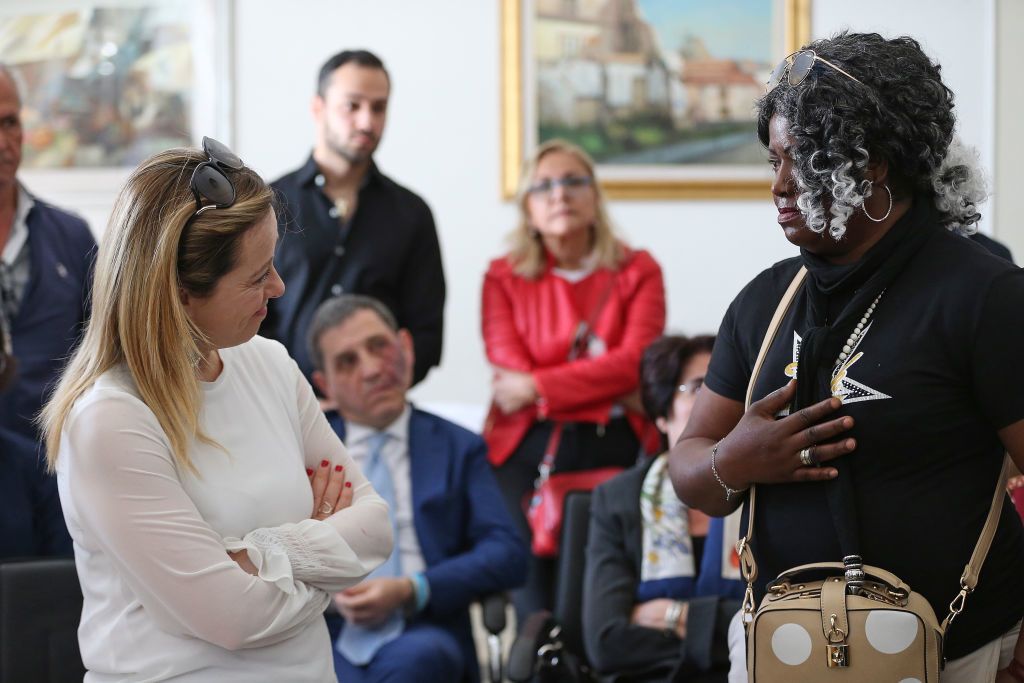
Meloni speaks with an immigrant woman, during a political meeting in Castel Volturno, for the local elections. | Marco Cantile/LightRocket via Getty Images
Meloni speaks with an immigrant woman, during a political meeting in Castel Volturno, for the local elections. | Marco Cantile/LightRocket via Getty Images
Prior to taking office, Meloni inherited a series of policies formed to combat violence against women, known as Italy’s “Red Code” laws, which laid the foundation for Meloni’s punitive strategy. Building on this framework, Meloni’s government passed Law No. 168 of 2023, which addressed domestic violence by increasing special protections and compensation for victims and their families, as well as increasing the penalties for domestic violence. This included guidelines to better prepare operators who interact with survivors.
Most notably, on the International Day for the Elimination of Violence Against Women in 2025, Meloni’s government approved a landmark bill codifying femicide as its own offense separate from homicide. Known as Law No. 181 of 2 December 2025, the bill designated femicide as a crime punishable by life imprisonment. Law No. 181 also addresses crimes such as revenge porn and stalking.
This strategy has received pushback from activists who argue that other areas should be prioritized. “We’re mainly worried that they choose to emphasize or only to work on the criminalization, so to act when the woman is dead without having to intervene before,” said Elena Biaggioni, a women’s rights advocate and lawyer based in Italy. Instead, many politicians and advocates are pushing to expand the GBV discussion to include the prevention of GBV occurrences.
In November of 2025, Meloni also worked with the opposition Democratic Party on a bill to add consent as the foundational consideration for rape charges in Italy’s Code of Criminal Procedure. However, her right-wing coalition partners blocked the bill in January.
The 2025 femicide bill was one of Meloni’s most recent and thorough anti-GBV accomplishments, getting approved through both houses of legislation. Though Brechenmacher sees the femicide bill as a symbolic measure for the country, “naming it is not the same as preventing it,” she says. “Harsher sentences do not automatically lead to deterrence.”


Gender-Based Violence in Mexico
Unlike Italy’s focus on punishment, Mexico’s approach centers on prevention and systemic reform.
GBV in Mexico includes a wide range of harm, from domestic abuse to online harassment to femicide. One of the biggest challenges Mexico faces is how its crimes are defined.
Mexico nationally recognizes femicide in Article 325 of its federal criminal code as the killing of a woman because of her gender, similar to UN Women’s definition.
In Mexico’s legal framework, however, this definition is not applied evenly. Similar to the United States, Mexican states are able to set their own legal criteria, which can change how cases are investigated and prosecuted.
If a killing is not investigated as a femicide, it may not trigger the same level of scrutiny or punishment.
“It’s so rare to finally get someone prosecuted for killing a woman or for femicide that when it happens, it’s national news,” Xochitl Barranco, a Mexican consultant on GBV, women, peace, and security, said. “They find women’s bodies every single day, but it’s so rare to finally get a sentence.”
A report from Human Rights Watch found that Mexico has an “excessively formal and bureaucratic” system, which leads to families of homicide victims often facing delays, lost evidence, and limited follow-through from authorities.
However, femicide is only the most extreme end of a wide spectrum of harm.
GBV in Mexico extends well beyond gender-motivated killings. Mexico’s own 2007 General Law on Women’s Access to a Life Free of Violence recognizes six distinct forms of GBV: psychological, physical, economic, patrimonial, sexual, and digital violence.
National survey data reflects the breadth of that harm. About 70 percent of Mexican women have reported experiencing some form of violence in their lifetimes, with psychological abuse the most prevalent, followed by economic control, physical abuse, and sexual violence.

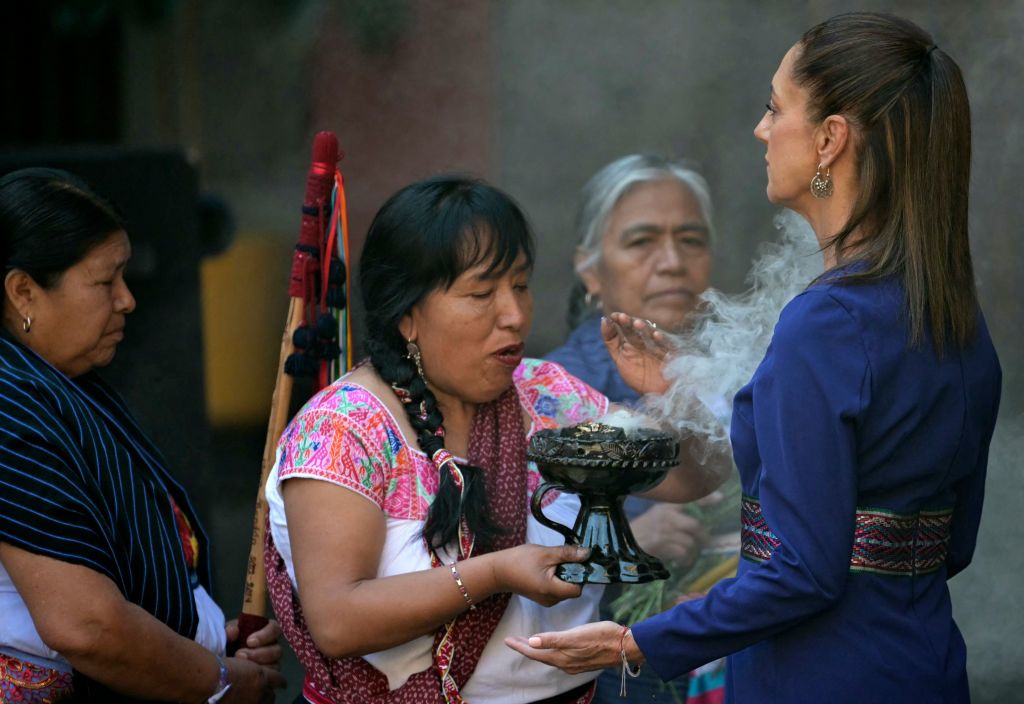
Mexico's President Claudia Sheinbaum takes part in a traditional indigenous ceremony where she is handed the baton of power within the commemoration of the International Women's Day at the National Palace in Mexico City on March 8, 2025. | Yuri Cortez/ AFP via Getty Images
Mexico's President Claudia Sheinbaum takes part in a traditional indigenous ceremony where she is handed the baton of power within the commemoration of the International Women's Day at the National Palace in Mexico City on March 8, 2025. | Yuri Cortez/ AFP via Getty Images
Sheinbaum has framed GBV as a structural problem rather than an individual one. In this view, violence is linked to inequality, social norms, and institutional failures that allow abuse to continue. Instead of focusing only on punishment, Sheinbaum’s approach emphasizes prevention, education, and systemic reform.
Over the past two decades, Mexico has built a wide legal framework to address GBV. At the center is the 2007 General Law on Women’s Access to a Life Free of Violence. This law creates a national system to prevent and respond to violence.
In 2020, Mexico was the first country in Latin America to formally adopt a feminist foreign policy. This policy framework aims to place gender equality and human rights at the center of government decisionmaking, both domestically and abroad.
In the first days of her administration, Sheinbaum signed into law a package of constitutional reforms modifying seven articles of the Mexican Constitution. These reforms include a formal guarantee of women’s right to live free from violence.
However, Barranco said Mexico has a pattern of laws outpacing enforcement.
“We have a lot of laws in Mexico,” she said. “But they haven't actually translated into action. Public policies are more focused on talking to the victims and being more reactive than actually being proactive.”
Mexico has also moved to address digital abuse through the Olimpia Law, which criminalizes the nonconsensual sharing of intimate images and is named after the activist who championed it after her own experience with digital violence. In March 2026, the Mexican government partnered with Meta, Google, and TikTok to strengthen reporting systems and remove harmful content—a sign of how anti-GBV efforts are adapting to new arenas of abuse.
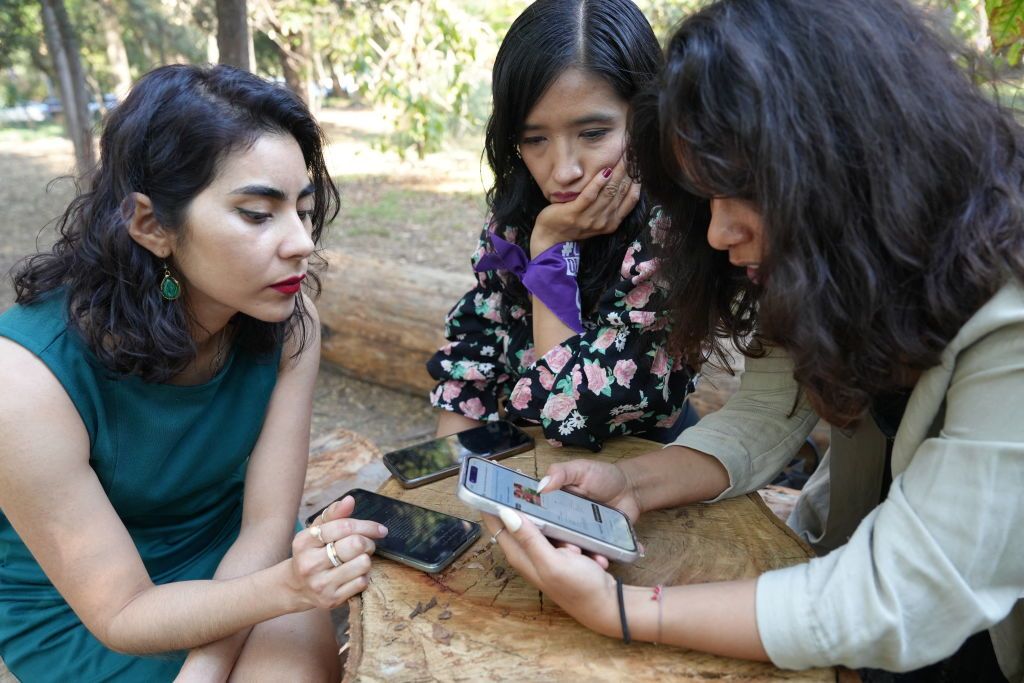
Members of the Digital Defenders Network of the Ley Olimpia movement Vania Sisai Rodriguez, Marcela Hernandez, and Salma Semiramis show how OlimpIA platform works on their phone during an interview with AFP in Mexico City on March 7, 2025. | Zina Desmazes/AFP via Getty Images
Members of the Digital Defenders Network of the Ley Olimpia movement Vania Sisai Rodriguez, Marcela Hernandez, and Salma Semiramis show how OlimpIA platform works on their phone during an interview with AFP in Mexico City on March 7, 2025. | Zina Desmazes/AFP via Getty Images
Despite these reforms, Barranco said the accumulation of legal commitments has not translated into accountability. She said there’s frustration among Mexican women due to the continued high rate of femicide over the past decade. And while policies are being implemented, results on the ground are not following.
“The causes of the violence against women are not actually being addressed,” Barranco said.
Impact of Policies
Sheinbaum and Meloni have taken starkly different structural approaches toward their GBV prevention policies, which have resulted in different impacts for their women constituents in their respective countries.
In 2025, the Beijing Declaration and Platform for Action, the United Nations’ landmark framework for advancing women’s rights, reached its 30th anniversary. The anniversary provided diplomatic urgency for gender equality commitments across governments. Whether it has translated into measurable change remains unclear in both Italy and Mexico.
In Italy, stalking, mistreatment of family, and sexual assault charges have shown a “constant increase” from 2021 through 2023. In Mexico, official rates of sexual assault and family violence have increased by over 50 percent in the last decade. However, it is difficult to distinguish whether there are truly higher rates of crime or whether there is heightened awareness of the issue, leading to more cases being reported.
According to March 2026 polling data from Mexico, Sheinbaum’s approval rating averages at 72 percent, with one poll from Buendía y Márquez finding that 76 percent of Mexican women approved of the president.
In a February 2026 poll from El Financiero, most respondents said Sheinbaum’s administration has done a good job handling social programs, but almost 80 percent disapprove of her handling of corruption and organized crime. Half of the respondents also said her administration is handling public security poorly.
In Italy, Meloni “stands out as an outlier of stability” among her European leader counterparts, with polls measuring her trust rating at 45 percent. However, Le Monde also highlights that 71 percent of Italian voters “believe that their country is headed in the wrong direction.”
Specifically following the League Party’s withdrawal of support for modernizing Italy’s rape laws, thousands took action to protest against and call out the Italian government. Italian politician and chair of the lower house of parliament’s human rights committee, Laura Boldrini, told The Observer that the Italian government had “betrayed” women.
In response, local public and private sector organizations have been working within their communities to fill the gaps left open by their administrations.
Meloni claims to have increased access to services that would reduce GBV. “We have doubled funding for antiviolence centres and shelters, promoted an emergency hotline and implemented innovative education and awareness-raising activities,” Meloni said in an interview in November 2025. Despite this, her track record remains unclear.
In Italy, women on the ground have been advocating for change through protesting and discussing the need for structural change rather than preventive approaches to policy.
Gergana Tzvetkova, a social science researcher at the Ca’Foscari University of Venice, who has researched GBV, says, “it’s not all about larger sentences . . . it’s about prevention.”
In Mexico, the urgency of GBV has driven citizens on the ground to take matters into their own hands through protests and activism.
Assessing Assumptions
Though their long-term policy implications are still unknown, Meloni and Sheinbaum’s cases still reveal the nuanced reality of women in the highest office. With divergent policy platforms, these two leaders raise the question of the role of representation.
“In both cases, I think we can recognize that changing gender norms and changing ideas about gender and gender equality doesn’t happen overnight,” said Katherine Bliss, senior fellow and director of the Global Health Policy Center at CSIS.


Composite image of Claudia Sheinbaum, pictured left, during an official visit at Palacio Nacional in Mexico City in January 2026, and Giorgia Meloni, pictured right, during a meeting with Bahrain's king in Rome in October 2023. | Manuel Velasquez via Getty Images (left) and Filippo Monteforte/AFP via Getty Images (right)
Composite image of Claudia Sheinbaum, pictured left, during an official visit at Palacio Nacional in Mexico City in January 2026, and Giorgia Meloni, pictured right, during a meeting with Bahrain's king in Rome in October 2023. | Manuel Velasquez via Getty Images (left) and Filippo Monteforte/AFP via Getty Images (right)
Still, representation should not be overlooked as a step for progress. Though female leadership does not directly translate into feminist policies, Bliss said that when women see politicians who have shared experiences with them, they may be more likely to get politically involved and share their aspirations.
However, representation must also be a tool to implement substantive policies to combat long-standing structural inequities.
“If female leaders can work with their constituents by placing these issues within the larger economic, political, and security context, they can build alliances and find people to support them to affect larger change,” Bliss said.
It is also important to take into account that these women are both working within systems that may provide constraints toward their efforts to implement policies and achieve goals. The Mexican president is allowed one singular six-year term, which means that Sheinbaum has a limited time to enact change. The Italian prime minister’s term is not fixed, but dependent on parliamentary confidence. However, the far-right political coalition that currently holds the majority of seats in the Italian Parliament often blocks policies interpreted as feminist.
Conclusion
Italy and Mexico serve as relevant case studies to examine whether female leadership leads to progress on gender equality. Both Giorgia Meloni and Claudia Sheinbaum took office as historic firsts amid rising concern about violence against women.
Both have elevated the issue. But the shape of their responses, who they protect, how they define the threat, and which women they center, diverges sharply.
Meloni has built a punitive, exclusionary framework that uses women’s safety to advance nationalist politics. Sheinbaum has pursued a structural, preventive approach that reaches toward the most marginalized. Neither has yet bent the curve on the violence itself.
These cases show that representation alone does not determine outcomes. Female leadership is not the same as feminist leadership. In countries where GBV is as entrenched as it is in Italy and Mexico, the question is not just whether a woman holds power—it is whose liberation she is actually working toward.
Furthermore, eliminating GBV is not a task that a female head of state can undertake alone. To effectively address this issue, all of society must be involved.
Feminist leadership is not only important at the highest levels of government. Feminist leadership must be present throughout society to truly progress gender equality. From on-the-ground activism, grassroots efforts, nonprofit organizations, local government, state government, and national government, each role plays a part in ensuring that all women are equally heard, seen, represented, and protected.
The future of women’s safety and freedom relies on collective feminist action today.

Story & Production by










Photo Credits
Hover to see image locations and credit information.

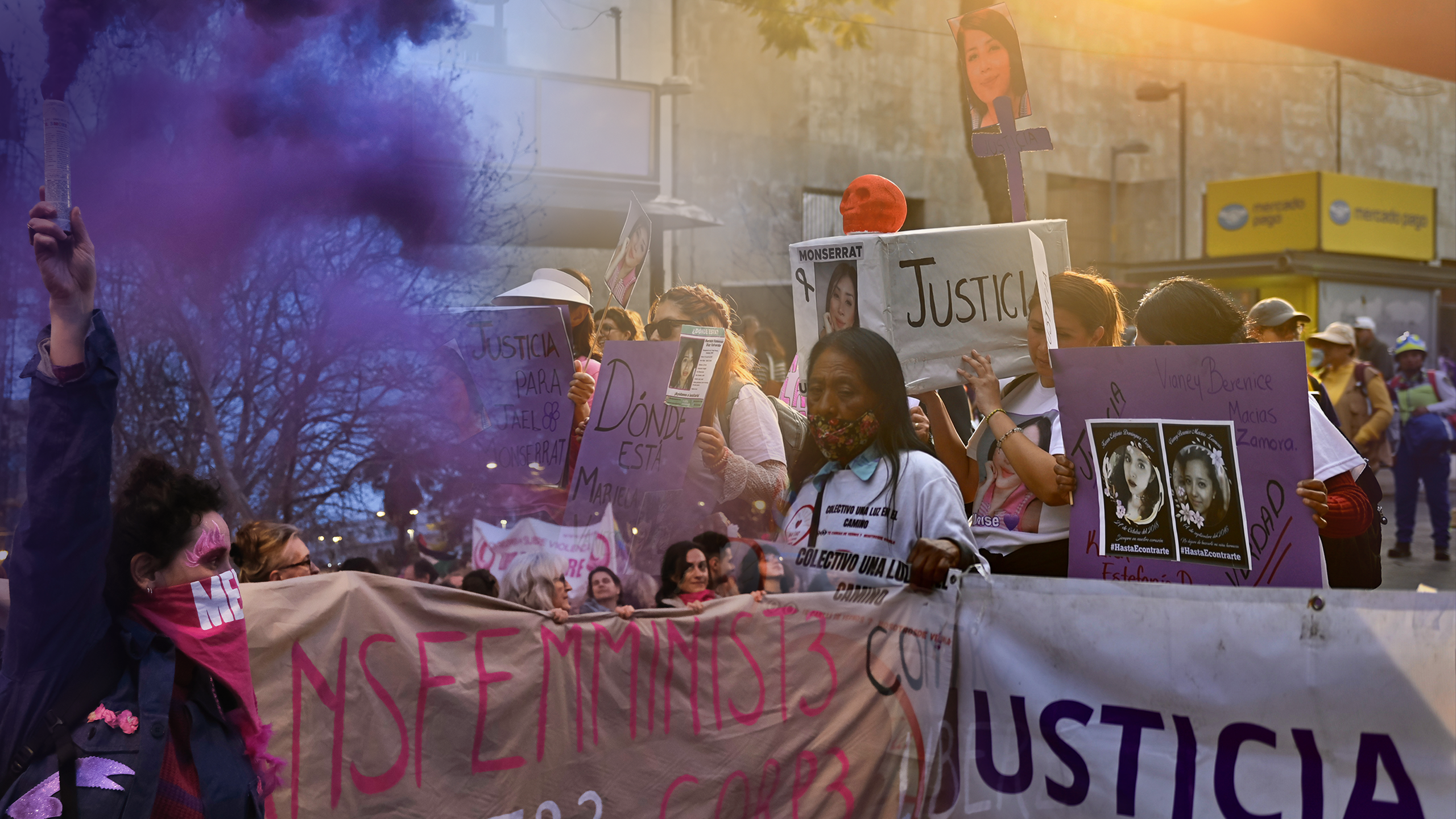
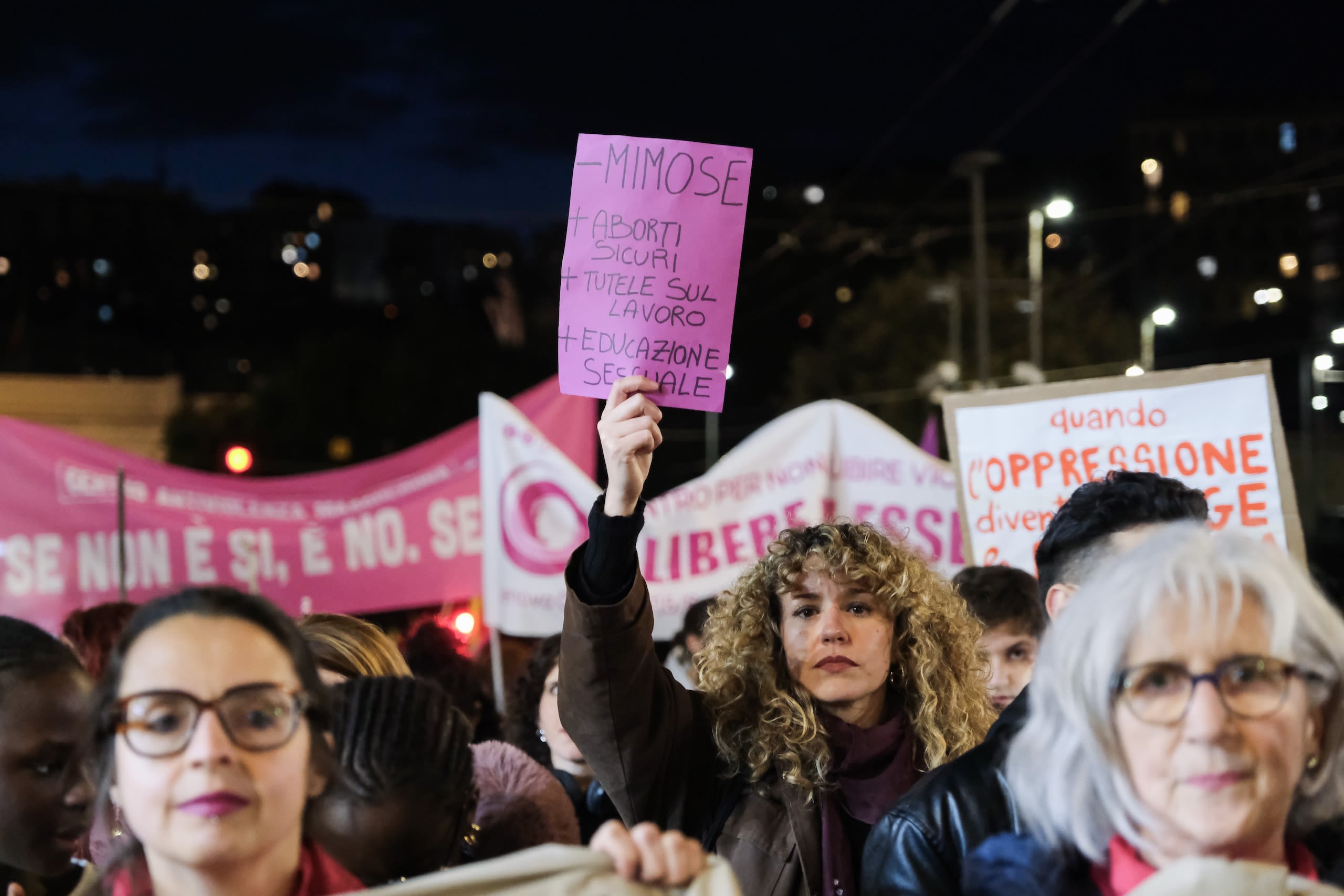
Composite image of the transfeminist march on International Women’s Day in Genoa, Italy in March 2026 (left) and a protest during the International Day for the Elimination of Violence Against Women in Mexico City in November 2025 (right). | Emanuela Zampa via Getty Images (left) and Lucía Flores/ObturadorMX via Getty Images (right).
Composite image of the transfeminist march on International Women’s Day in Genoa, Italy in March 2026 (left) and a protest during the International Day for the Elimination of Violence Against Women in Mexico City in November 2025 (right). | Emanuela Zampa via Getty Images (left) and Lucía Flores/ObturadorMX via Getty Images (right).

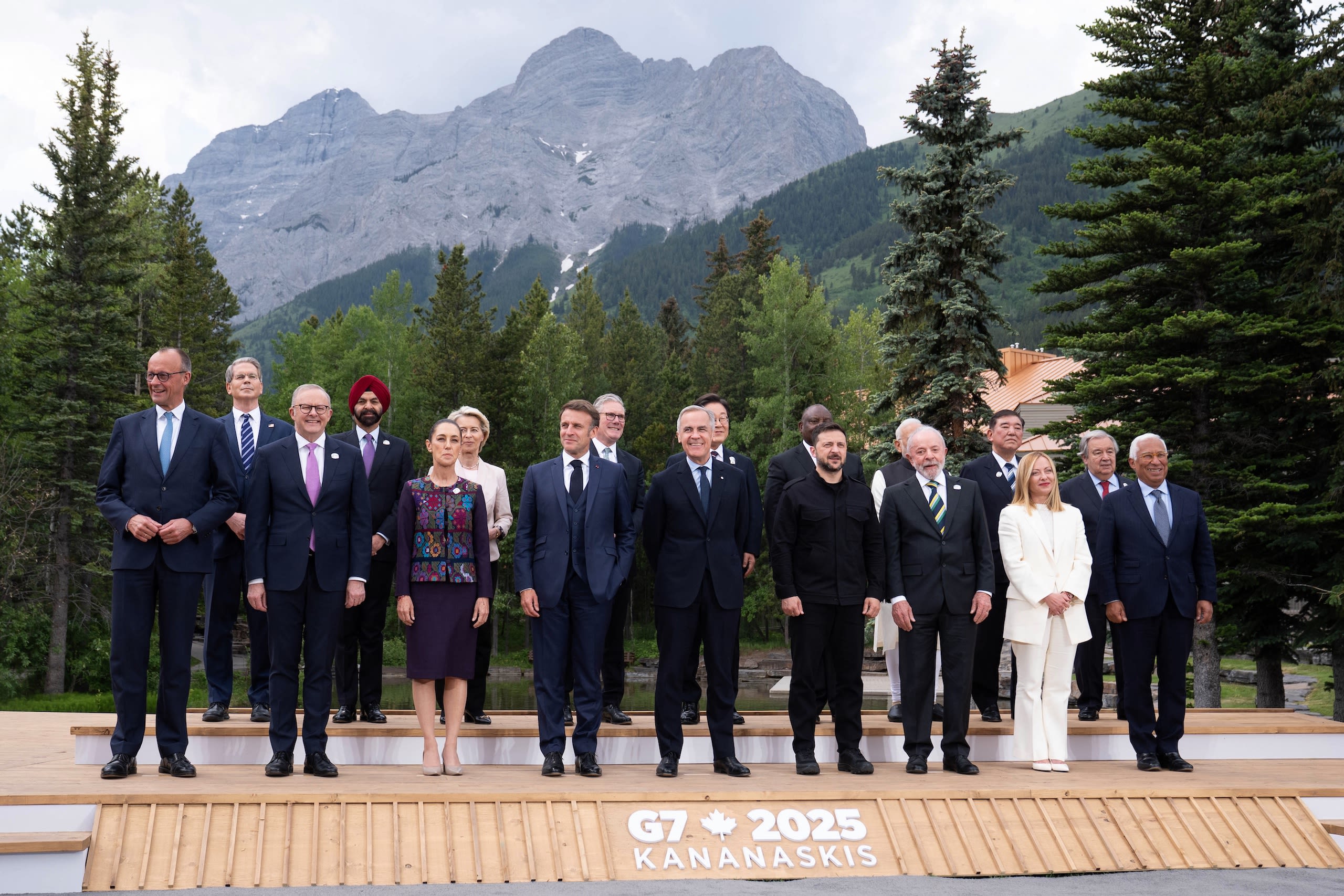
World leaders pose for a photo during the Group of Seven (G7) Summit at the Kananaskis Country Golf Course in Kananaskis, Alberta, Canada on June 17, 2025. | Stefan Rousseau/POOL/AFP via Getty Images
World leaders pose for a photo during the Group of Seven (G7) Summit at the Kananaskis Country Golf Course in Kananaskis, Alberta, Canada on June 17, 2025. | Stefan Rousseau/POOL/AFP via Getty Images
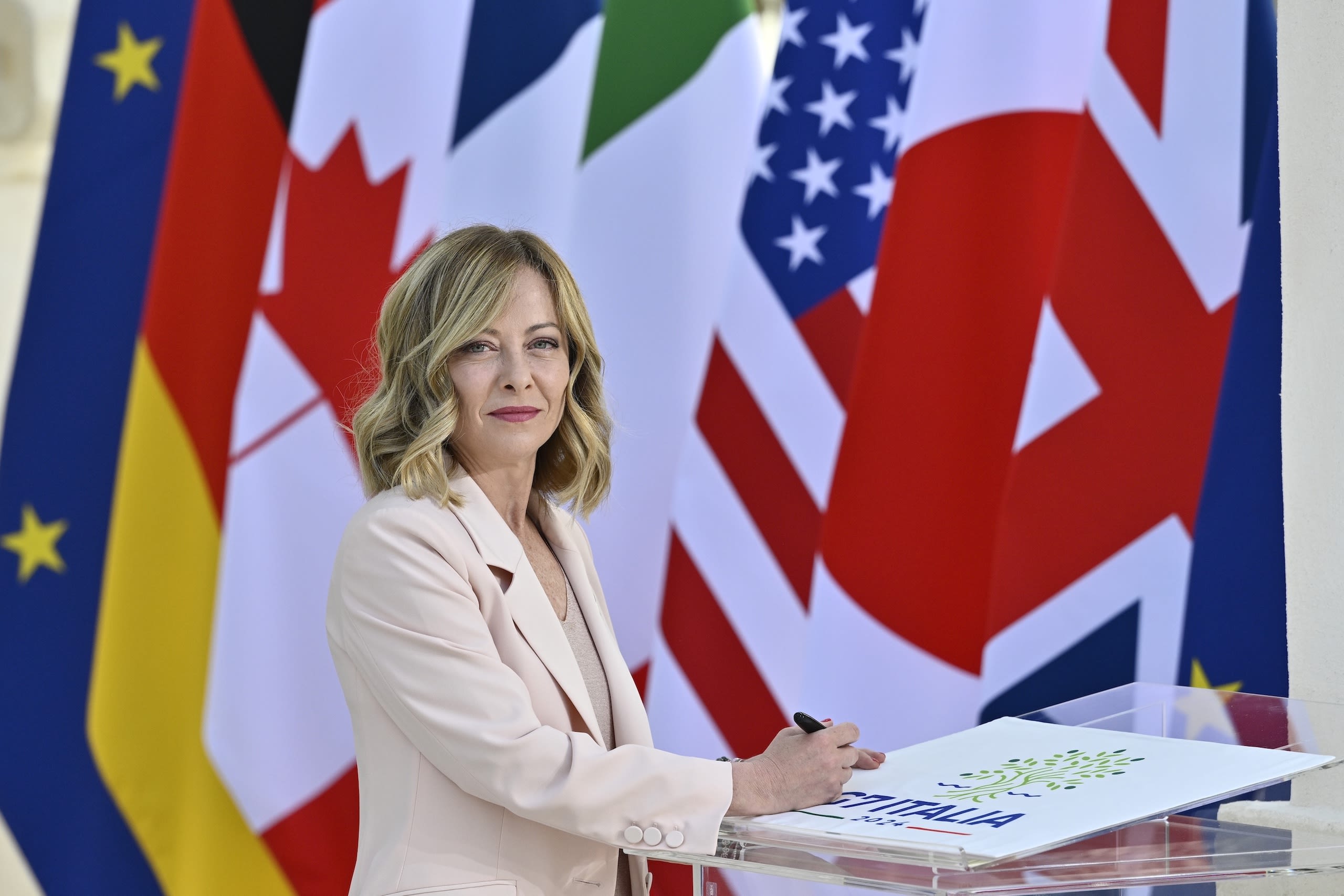
Italian Prime Minister Giorgia Meloni attends a welcome ceremony on June 13, 2024 in Fasano, Italy. | Antonio Masiello/Getty Images
Italian Prime Minister Giorgia Meloni attends a welcome ceremony on June 13, 2024 in Fasano, Italy. | Antonio Masiello/Getty Images

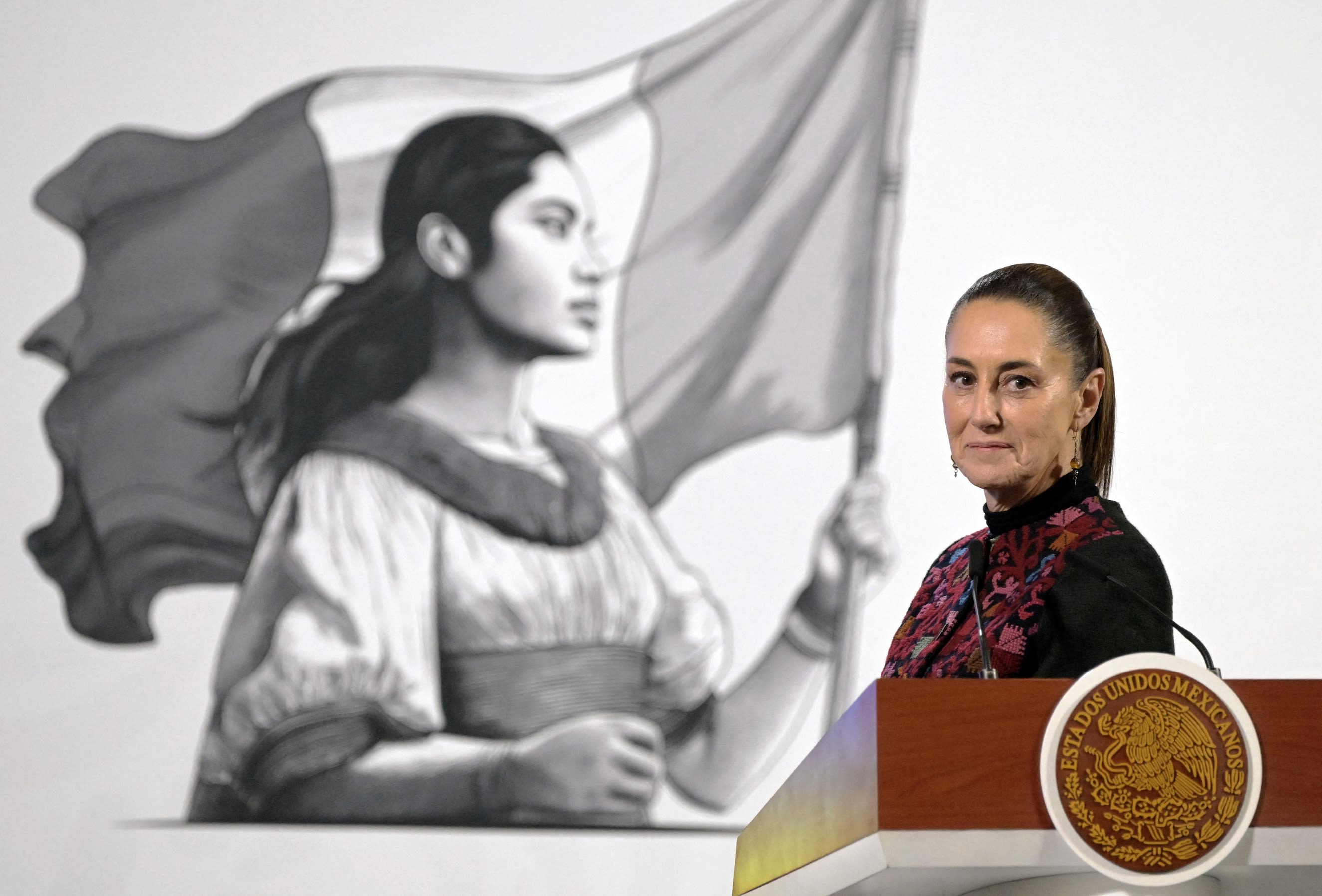
Mexico's President Claudia Sheinbaum gestures during her daily conference at the National Palace in Mexico City on January 8, 2025. | Alfredo Estrella/AFP via Getty Images
Mexico's President Claudia Sheinbaum gestures during her daily conference at the National Palace in Mexico City on January 8, 2025. | Alfredo Estrella/AFP via Getty Images
The transfeminist march on International Women’s Day on March 09, 2026 in Genoa, Italy. | Emanuela Zampa via Getty Images
The transfeminist march on International Women’s Day on March 09, 2026 in Genoa, Italy. | Emanuela Zampa via Getty Images

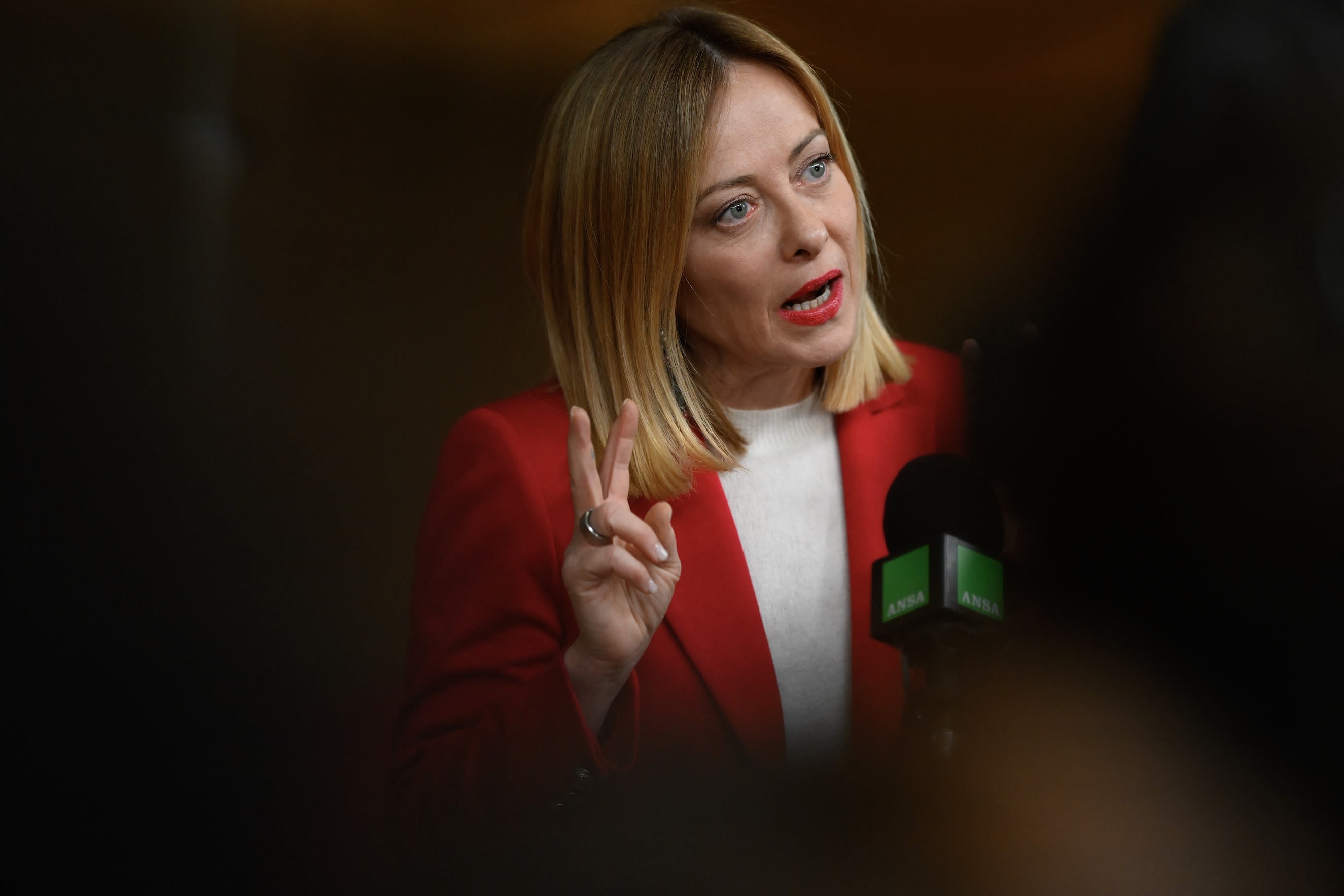
Italian Prime Minister Giorgia Meloni delivers remarks to media on the sidelines of the European Union Summit being held at the Europa Building, in Brussels on March 20, 2025. | John Thys/AFP via Getty Images
Italian Prime Minister Giorgia Meloni delivers remarks to media on the sidelines of the European Union Summit being held at the Europa Building, in Brussels on March 20, 2025. | John Thys/AFP via Getty Images

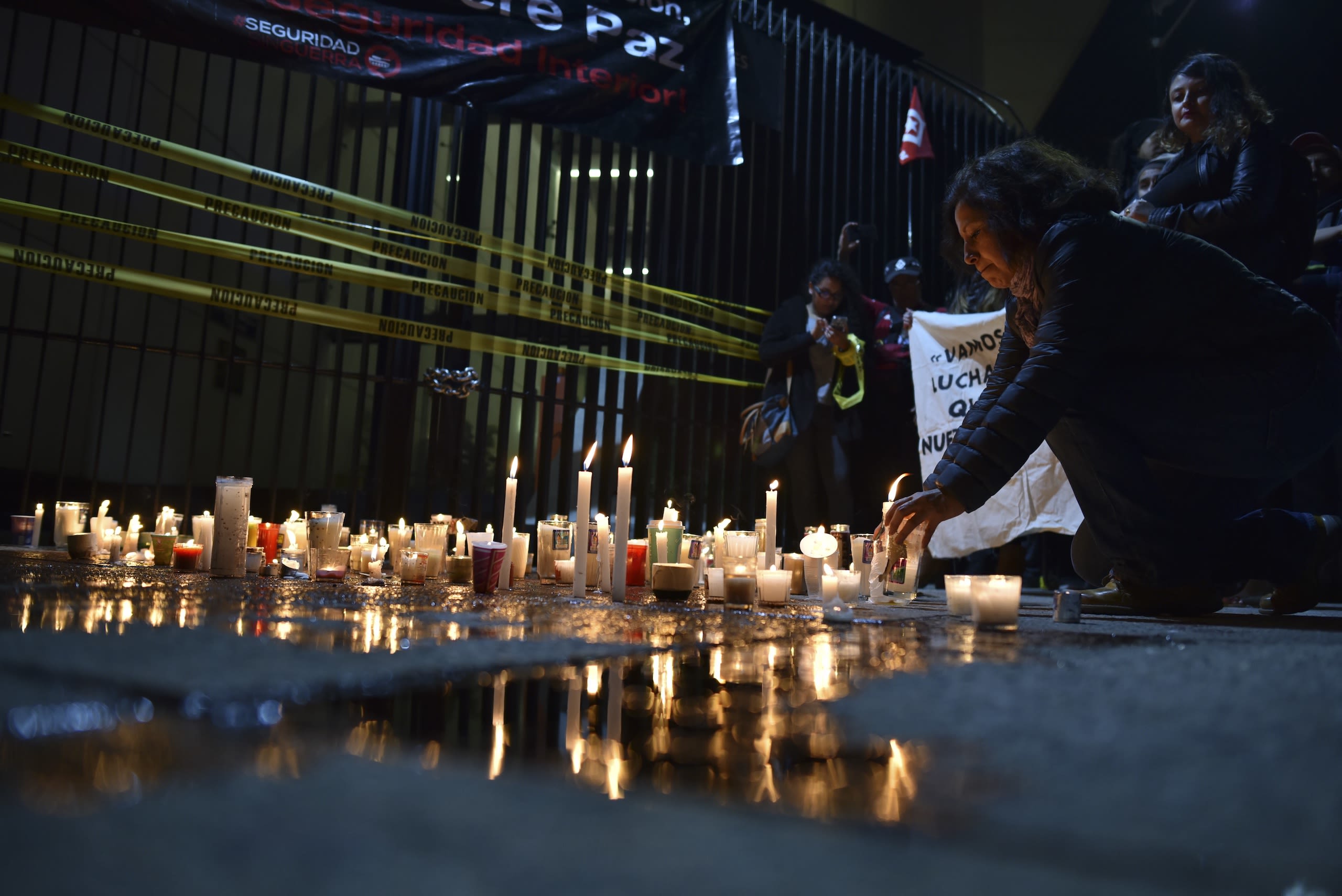
Demonstrator lights candles during a protest vigil and the symbolic closing of the Senate building against the potential approval of an Internal Security Law which would allow the army to act as police, in Mexico City, on December 13, 2017. | Yuri Cortez/AFP via Getty Images
Demonstrator lights candles during a protest vigil and the symbolic closing of the Senate building against the potential approval of an Internal Security Law which would allow the army to act as police, in Mexico City, on December 13, 2017. | Yuri Cortez/AFP via Getty Images
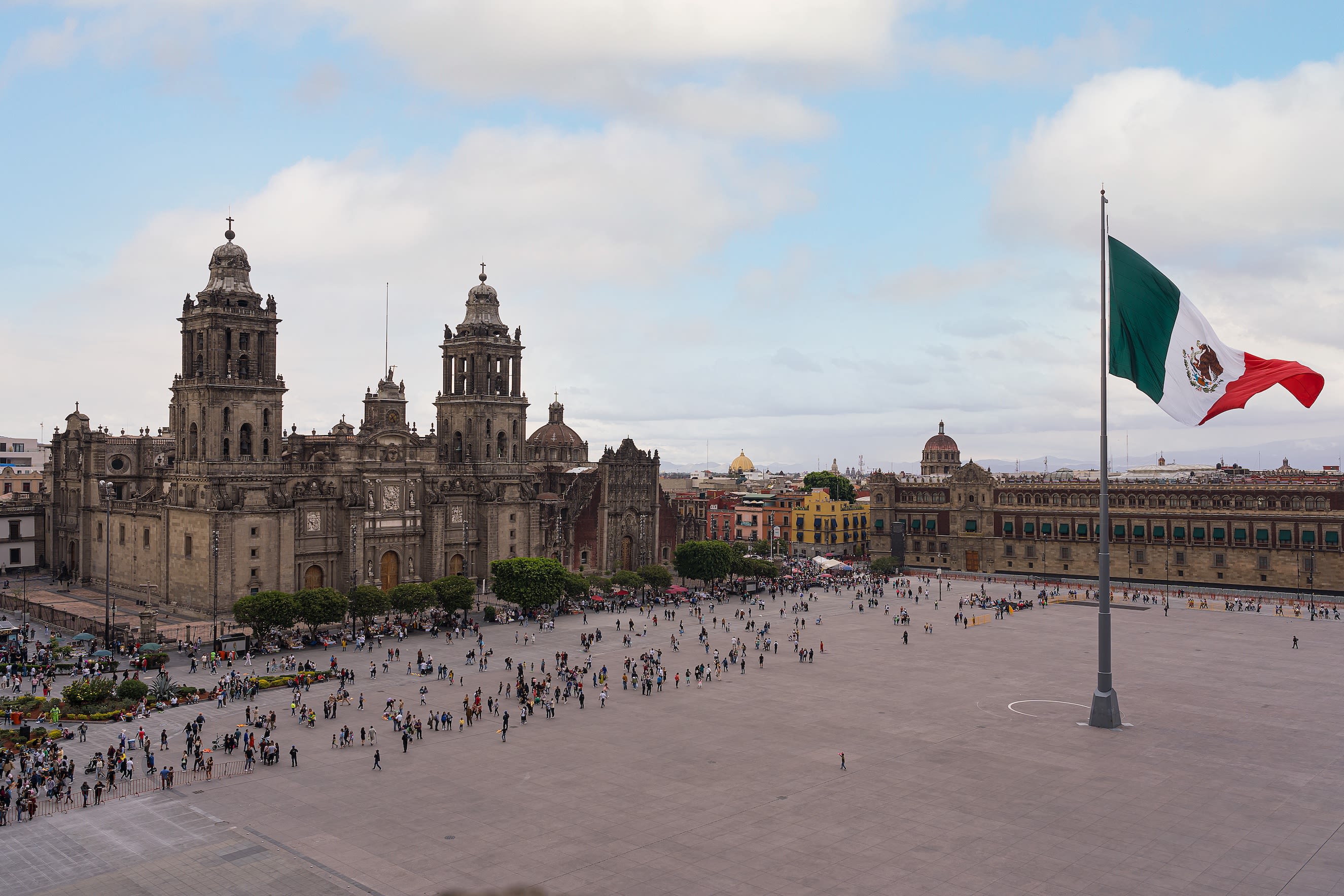
The Mexican flag flies over the Zocalo, the main square in Mexico City. | Kmatta via Getty Images
The Mexican flag flies over the Zocalo, the main square in Mexico City. | Kmatta via Getty Images
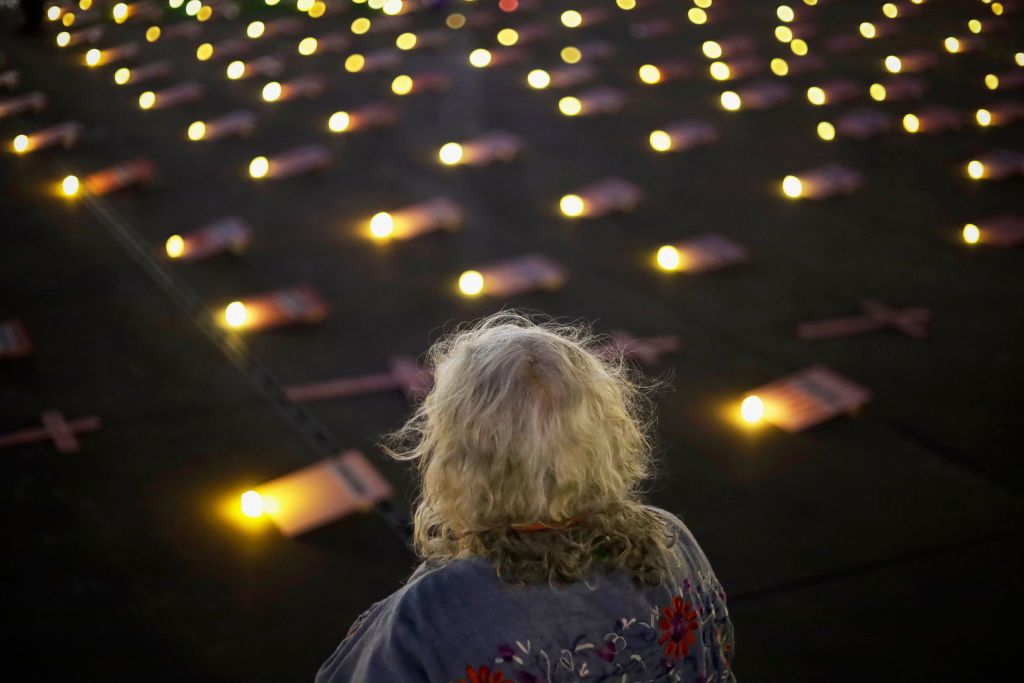
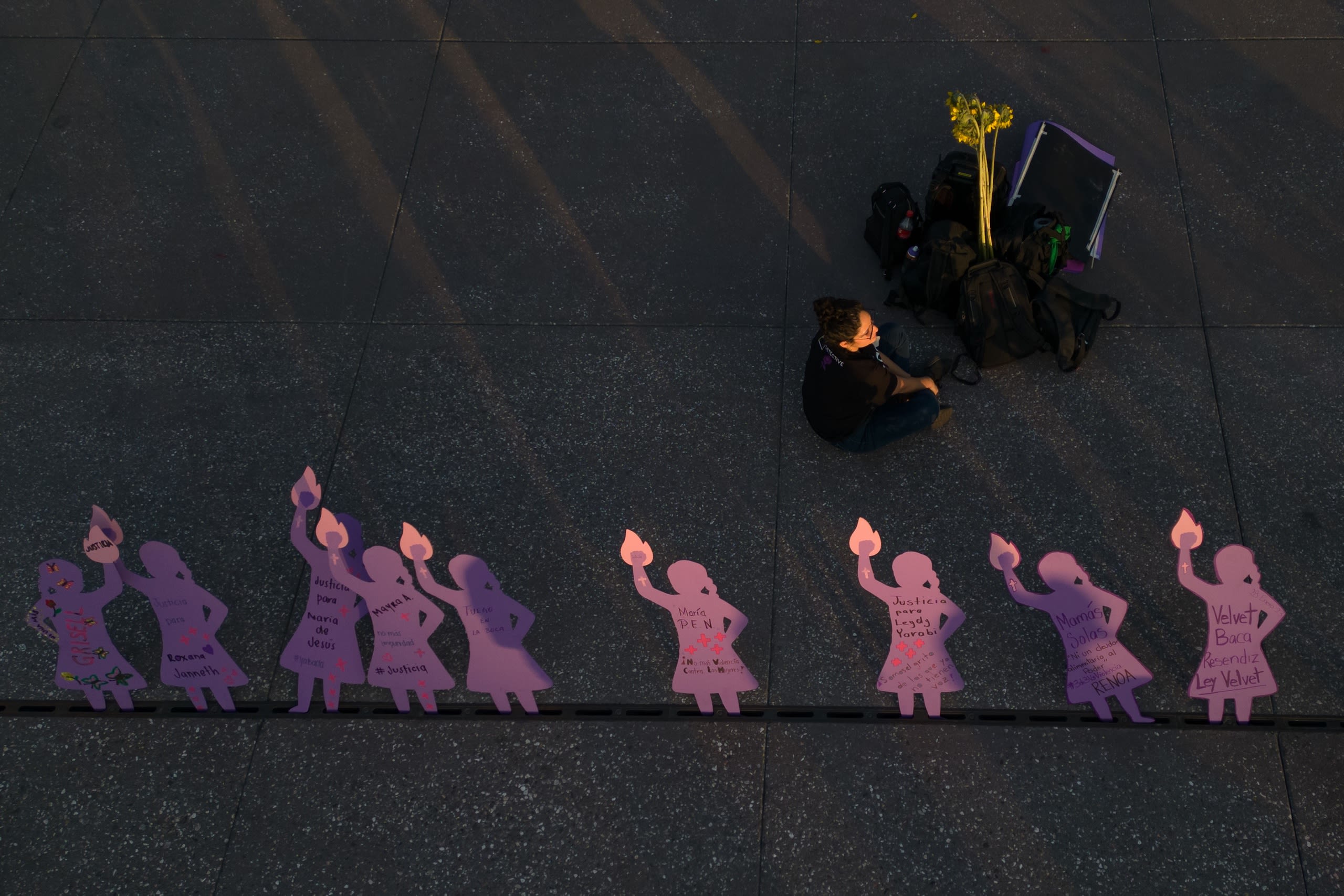
An aerial view of the purple silhouettes which represent victims of femicide in front of the National Palace during a protest to mark International Day for the Elimination of Violence against Women, in Mexico City, Mexico on November 25, 2023. | Daniel Cardenas/Anadolu via Getty Images
An aerial view of the purple silhouettes which represent victims of femicide in front of the National Palace during a protest to mark International Day for the Elimination of Violence against Women, in Mexico City, Mexico on November 25, 2023. | Daniel Cardenas/Anadolu via Getty Images
Special Thanks:
Story: Gina Kim
Video: Shawn Fok
Audio: Cera Baker
Data: William Taylor with Sabina Hung
Editorial: Sarah B. Grace with Marla Hiller
 Built with Shorthand